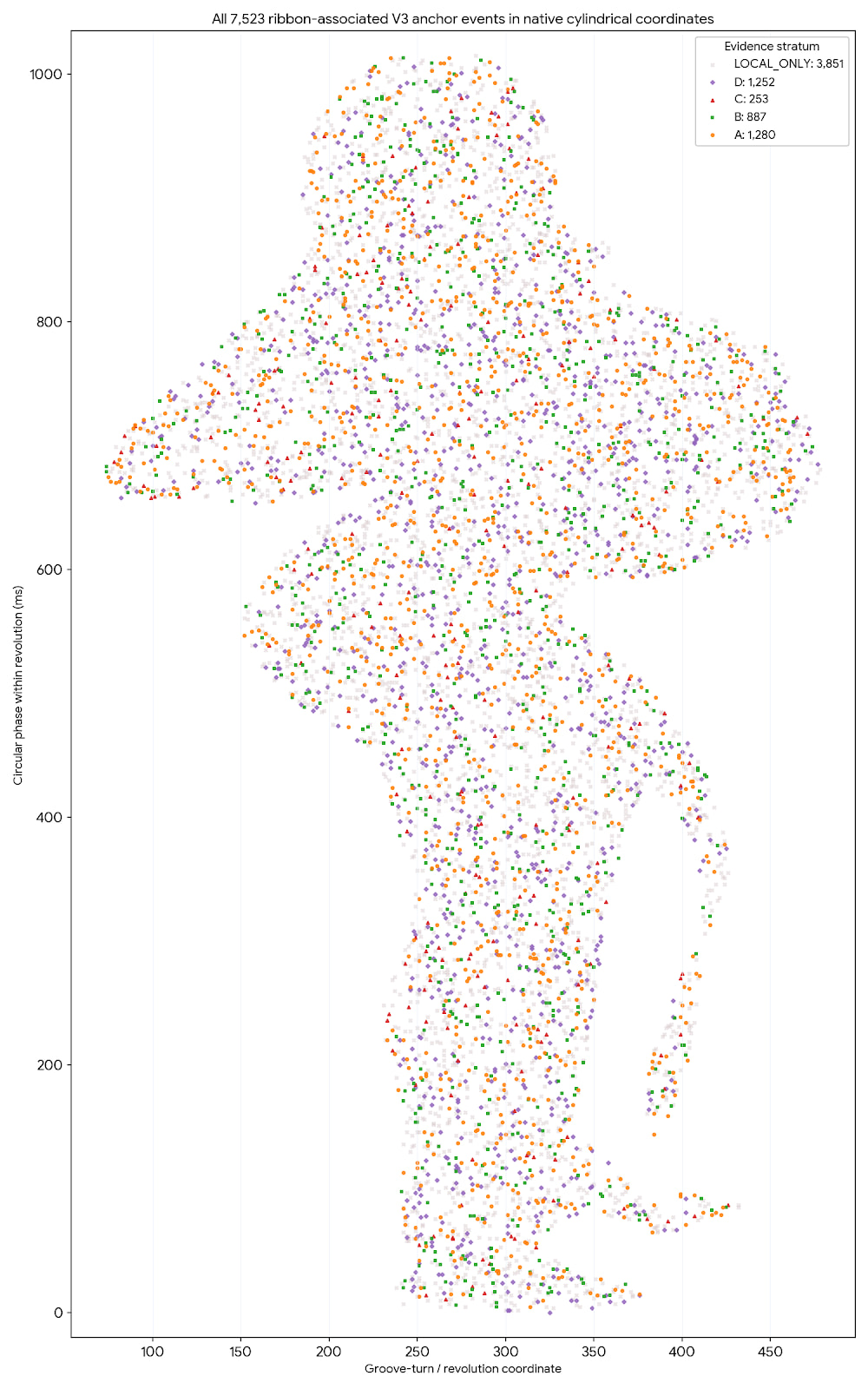
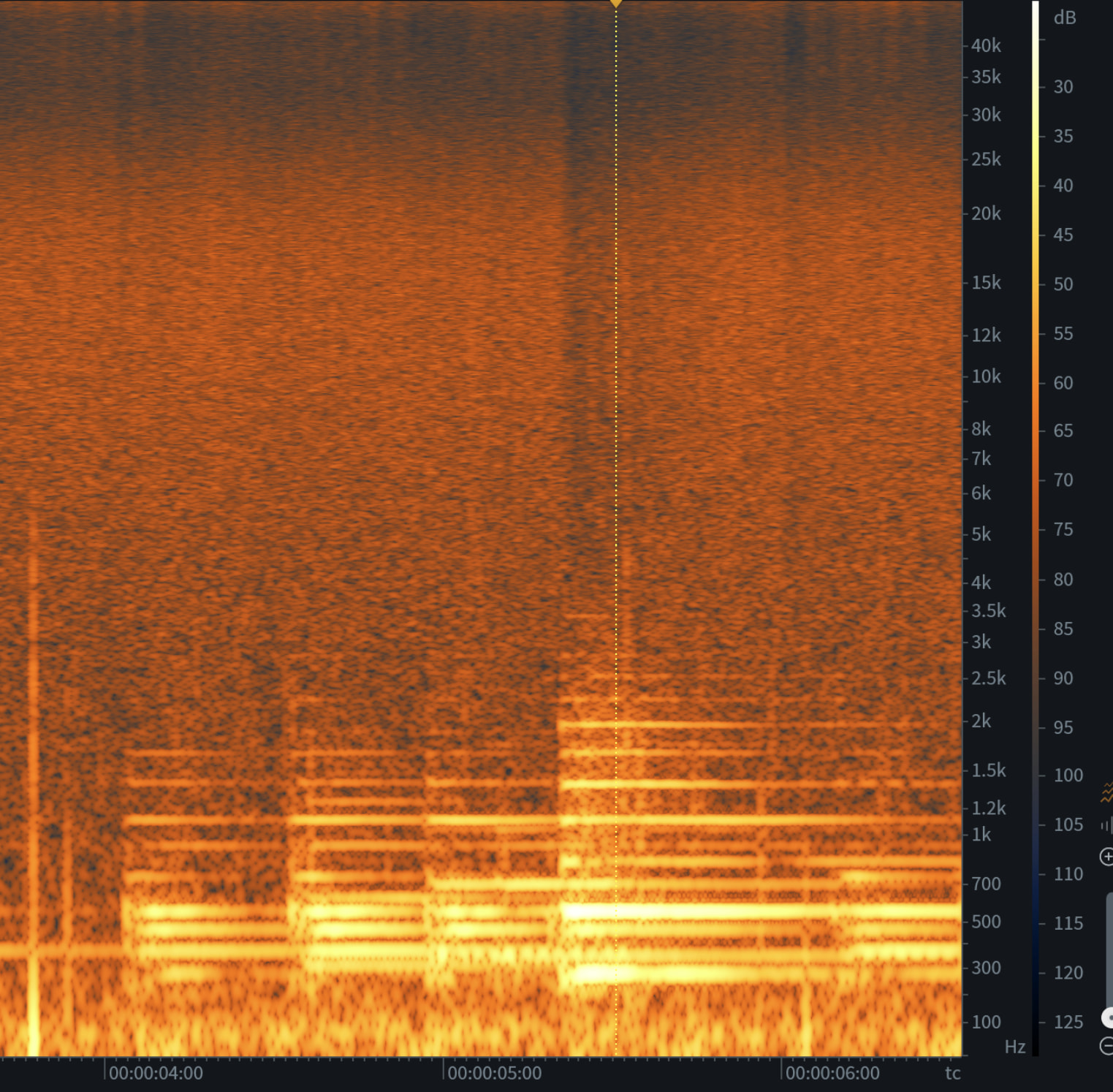
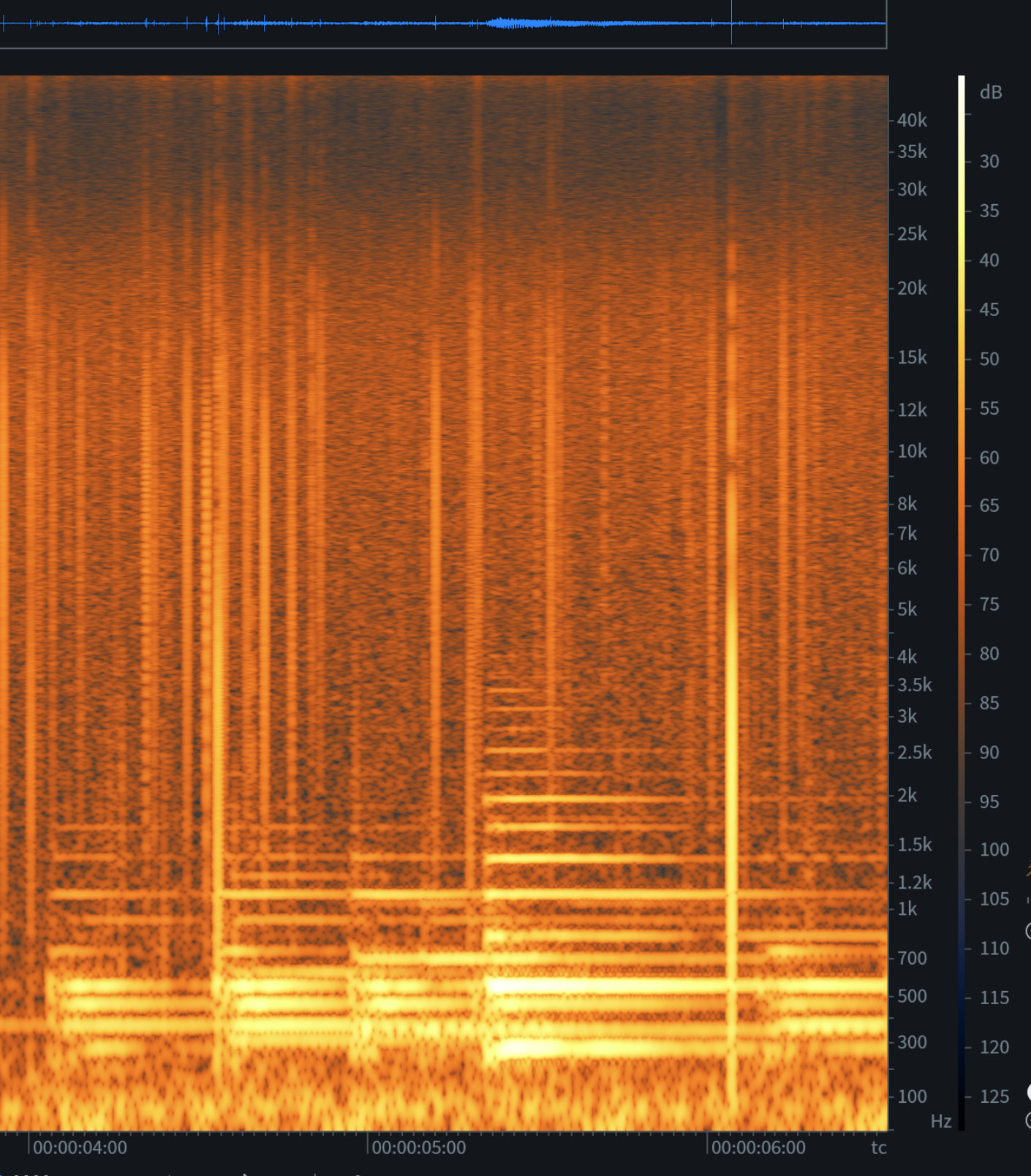
My idea is to use the strong correlation of all these scratches across rotation events to make a hyper accurate physical model. The click analysis I built for the last project is sample accurate so I could theoretically get time domain lens down to whatever 96khz is through fastest travel path.
This mean theoretical model could outperform known optical and laser analysis tools.
From there I can use it to anchor assumptions on stylus travel in groove path and do all sorts of insane new shit in physical domain instead of just looking at fourier transforms of sound wavez. Would be domain transfer then and COOL AS FUCK.
Now that I figured out how to iterative testing shit properly I am rewriting my Stereo to Mono transfer shits, my brute force biquad engine for historical curves thing, and finishing my mega bizarro project translating clicks into spatial models I can bukakke phsyics and new statistical approaches on.
Codex allowing me to make more spaghetti than a dirty italian yo
Been spending days extending Wurcer’s biquad / historical calculation research I liked so much. SHIT WORKED
Direct minimax optimization — Instead of merely applying a conventional bilinear transform, it minimizes the worst absolute magnitude error across 20 Hz–20 kHz. This is better suited to archival accuracy than least-squares fitting, which can hide a large local error inside a good average.
Eight independent global searches — Differential evolution explores the complete bounded two-SOS parameter space from eight deterministic seeds. This greatly reduces dependence on the initial guess and avoids accepting the first local minimum.
Intensive local refinement — Every global-search result receives up to 50,000 Powell-polishing iterations. The best result among all eight independently polished candidates is selected.
Native pole-and-zero solution — Required roots and auxiliary high-frequency compensation roots are optimized together. No pole is inserted, shifted, or repaired after calculation.
Independent validation — The selected coefficients are re-evaluated at 1,000,001 frequencies, followed by continuous refinement around apparent extrema. The validation grid is separate from the fitting grid.
Full binary64 precision — All calculations use 64-bit floats. Audacity coefficients are printed with 17 significant digits, and all 192 exported coefficient literals round-trip exactly to their stored binary64 values.
Measured 96 kHz accuracy — Across all 16 regenerated curves, the worst result was only:
0.000005896 dB maximum absolute error
0.000011792 dB peak-to-peak errorThat is over 50× inside the 0.000300 dB maximum-error requirement and over 42× inside the 0.000500 dB peak-to-peak requirement. See the [canonical batch manifest](/C:/AI Projects/Updated Wurcer Biquad/runs/archival-master-v2-0-0/fs-96000/batch_manifest.json).
RIAA improvement — The optimized RIAA-from-flat result reached approximately 0.000004921 dB maximum and 0.000009841 dB peak-to-peak error. Under the same validator, that is roughly 55× lower maximum error than the project’s evaluation of Wurcer’s published 96 kHz starting design.
FUCK YES!
Quick tonality check using ultra Bi shits. Sounds miraculous! (on my phone speaker)
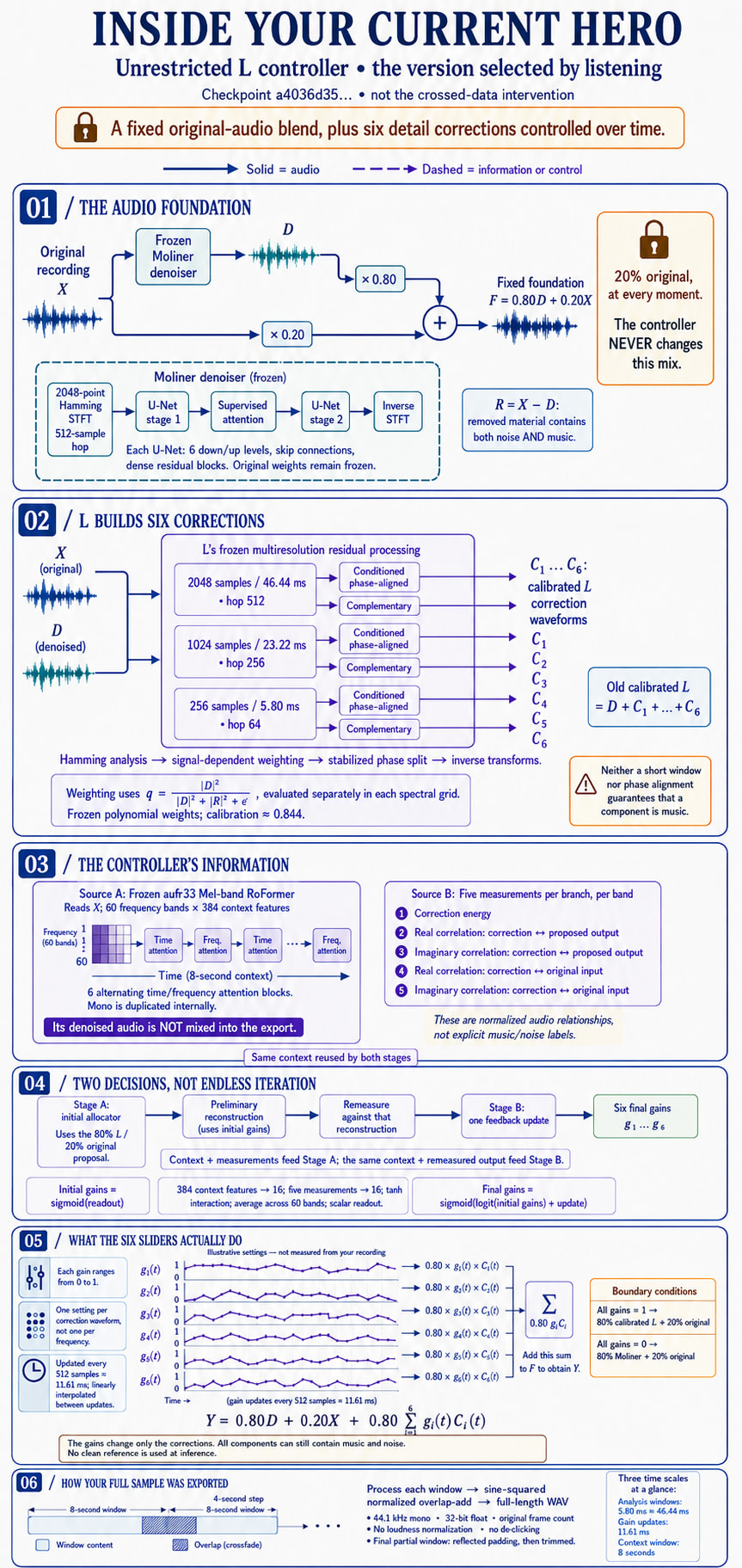
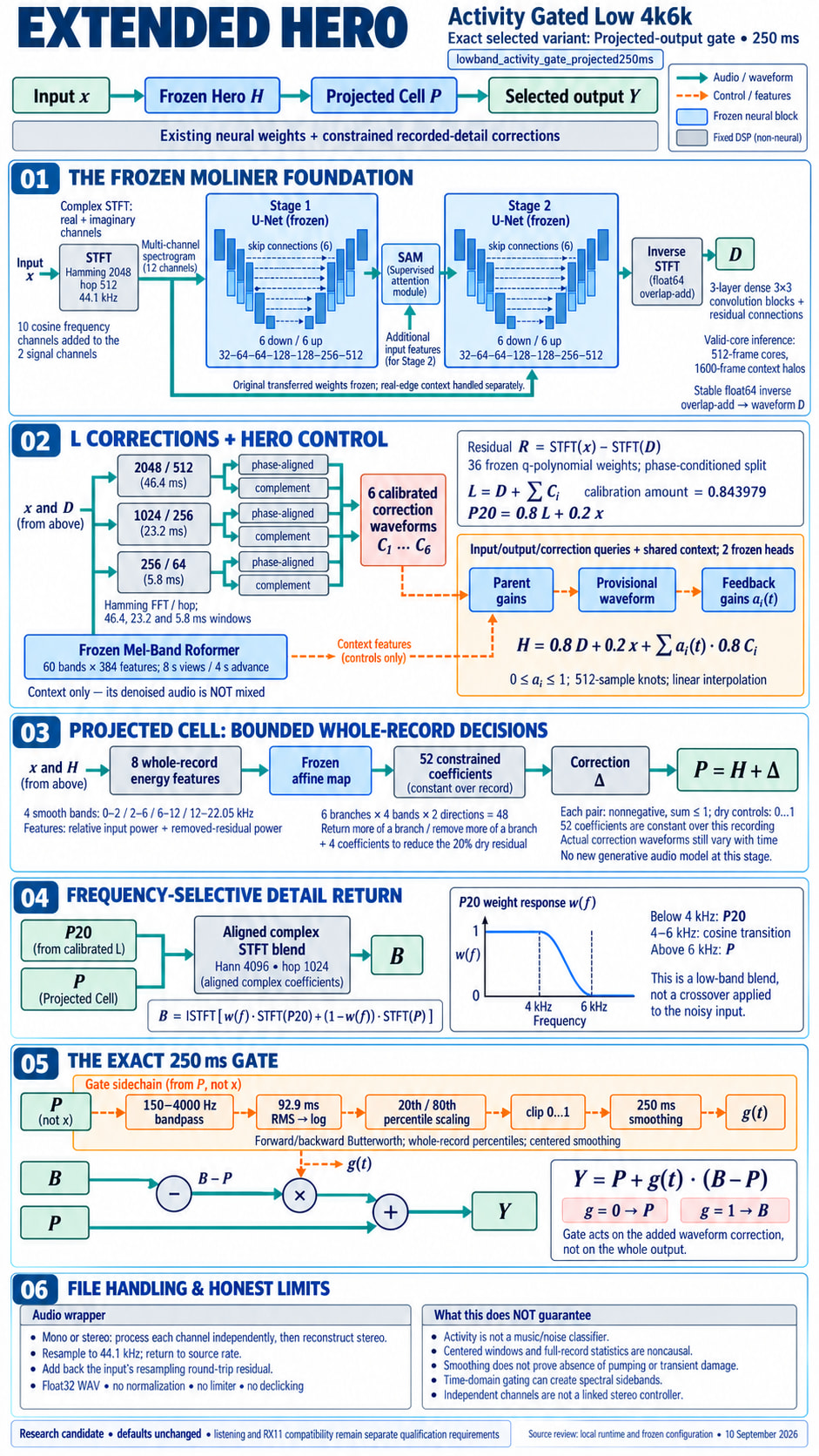
Insane search continues. Tweaking the moliner so there is stage which recovers moosical info from the residual at varied temporal windows and adds them back to save details.
i’m still using codex to research recording dates for my jriver library. been at it 2 weeks now i think, probably hastened digital armageddon by at least a year
I boiled like three lakes making abysmally performing click removal programs when I have RX11 on the machine already. Let Gen Z pick up the pieces I’m going full Boomer!